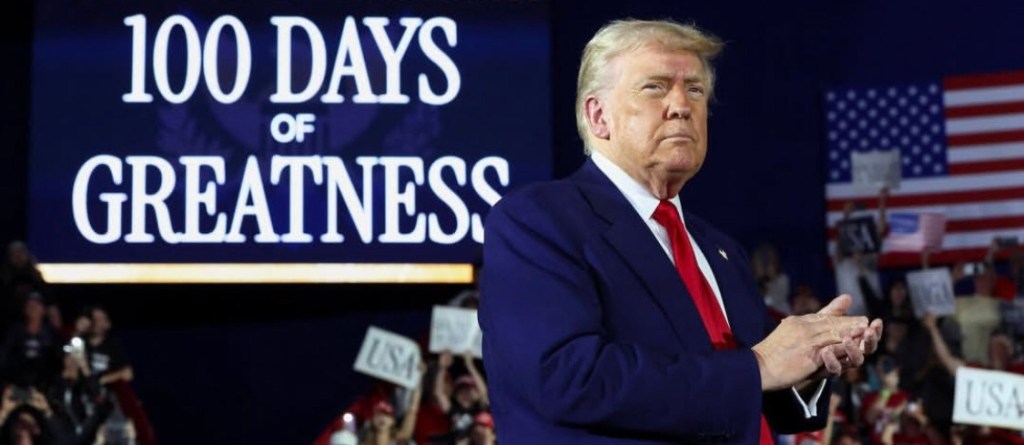
As the world reflects on the first 100 days of Donald Trump’s second term in the Oval Office, a myriad of opinions and analysis have emerged regarding his performance and the political landscape that surrounds him. Despite the fervent support he enjoyed during his initial tenure, the current climate of discontent is palpable, with his approval ratings plummeting to unprecedented lows. Several factors contribute to this waning popularity, including controversial policy decisions, a divisive communication style, and a growing disillusionment among his core supporters.
One of the most contentious moves made by Trump early in his presidency was the imposition of tariffs on a wide range of imports. Originally touted as a strategy to protect American industries and promote domestic production, these tariffs have sparked outrage not only among international trading partners but also within the very heart of his base—the working-class Americans who he claimed to champion. The subsequent increase in consumer prices and retaliatory tariffs from foreign nations has raised concerns about the long-term economic impact of such unilateral actions. For many, the reality of higher costs for goods stands in stark contrast to the promises of economic revival and job creation that fueled his initial rise to power.
Moreover, Trump’s oligarch-style propaganda and rhetoric, which often centers around a narrative of victimization and the portrayal of dissent as treachery, have drawn criticism from various quarters. While this approach may have resonated with his base during his first term, the current political landscape has shifted, and the same tactics seem to alienate moderate voters and even some loyal supporters. The constant barrage of misinformation, coupled with an overtly confrontational stance toward any form of criticism, has led to a growing sense of fatigue among the electorate. As many Americans reel from the ongoing fallout from his administration’s previous controversies, the lack of substantive policy discussion and a reliance on inflammatory rhetoric has left many questioning the effectiveness of his leadership.
Furthermore, the introduction of tariffs has not only angered traditional supporters but also raised questions about the coherence of his economic strategy. Many in the MAGA movement, who once viewed Trump as a champion of free-market principles, are now grappling with the reality that protectionist policies may ultimately do more harm than good. The resultant fracturing within his base underscores a broader concern about his ability to unify disparate factions of the Republican Party and maintain the fervent loyalty that has characterized his political brand.
In addition to policy decisions, Trump’s approach to governance has also drawn scrutiny. His tendency to govern through a lens of personal loyalty rather than established protocols or expertise has led to the dismissal of key advisors and a lack of cohesion within his administration. This has resulted in an unstable governing environment, further alienating a segment of the electorate that values experience and stability in leadership.
As Trump navigates the complexities of his second term, it is evident that the political landscape has evolved since his initial victory. The issues that once propelled him to the forefront of American politics are now met with skepticism and concern. The low approval ratings reflect not only dissatisfaction with his policies but also a broader disillusionment with the state of American democracy and governance.
In conclusion, Donald Trump’s first 100 days of his second presidency reveal a leader grappling with the challenges of maintaining his base while attempting to attract a wider audience. His controversial tariff policies, coupled with an oligarch-style approach to rhetoric and governance, have alienated many who once stood firmly in his corner. As he moves forward, it remains to be seen whether he can recalibrate his strategies to address the concerns of his supporters while seeking to broaden his appeal in a rapidly evolving political environment. The road ahead is fraught with challenges, and the stakes have never been higher for the future of his presidency.
 Killeigh Media